


Conference Hall Seats Production for Libya Quality, Capacity, and Regional Requirements
Conference hall seats production for Libya has become an increasingly important topic as the country continues to invest in public infrastructure, education, government facilities, and private developments. From universities and cultural centers to government buildings and corporate conference halls, the demand for durable, ergonomic, and high-capacity seating solutions is steadily growing.
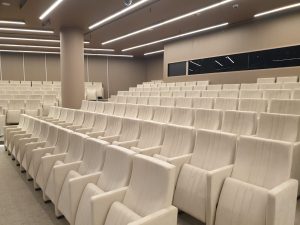
Understanding Libya’s Conference Hall Seating Needs
Libya’s climate, usage intensity, and public-space requirements play a key role in conference hall seat production. Seating systems must be designed to withstand high temperatures, dust exposure, and frequent use while maintaining comfort and structural integrity. For this reason, manufacturers producing conference hall seats for Libya typically prioritize robust metal frames, high-density foam padding, and upholstery materials that are resistant to wear, fading, and moisture.
In addition, large-scale halls in Libya often require seating layouts that maximize capacity without compromising visibility or audience comfort. This makes careful engineering, row spacing, and sightline optimization essential during the production phase.
Materials and Production Standards
High-quality conference hall seats production relies on a combination of precision manufacturing and certified materials. Steel or aluminum structures are commonly used to ensure long-term durability, while injection-molded plastic or wooden armrests add both functionality and visual appeal. Upholstery options such as fabric, synthetic leather, or genuine leather are selected based on project requirements, maintenance expectations, and budget.
For projects in Libya, fire-retardant materials and international safety standards are particularly important. Many suppliers align their production with EN and ISO standards to meet the expectations of public institutions and international contractors operating in the region.
Customization and Project-Based Manufacturing
One of the key advantages of modern conference hall seats production is the ability to offer full customization. Seating can be tailored in terms of color, fabric type, armrest design, writing tablets, cup holders, and seat numbering systems. This flexibility allows conference halls in Libya to reflect institutional identity while meeting functional needs.
Production is often carried out on a project basis, enabling manufacturers to adapt seating dimensions, fixing methods, and modular components according to the architectural structure of each hall.
Logistics and Export Considerations
Export-oriented conference hall seats production for Libya requires careful planning in packaging, container loading, and shipping. Seats are typically designed for knock-down or semi-assembled delivery to reduce transportation costs and simplify on-site installation. Clear installation manuals and technical support further ensure efficient project execution.
Conference hall seats production for Libya combines technical expertise, climate-aware material selection, and flexible manufacturing processes. By focusing on durability, comfort, and international standards, manufacturers can deliver seating solutions that support Libya’s growing demand for modern, functional conference and auditorium spaces.
